Structure, classification, and most common autoclaves today
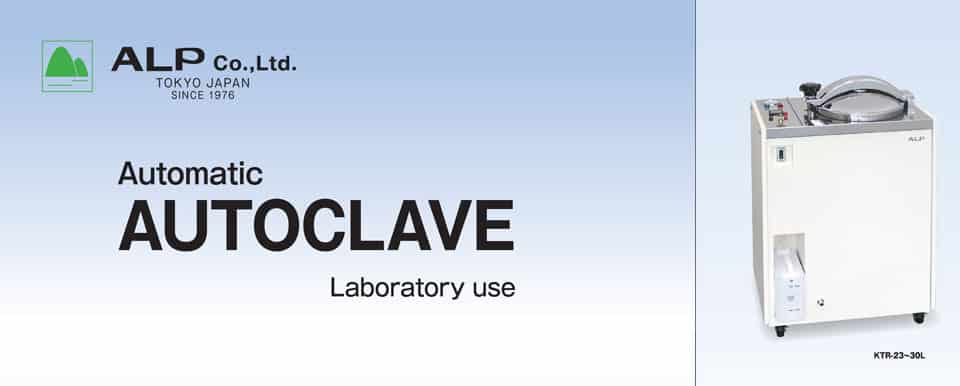
An autoclave is an indispensable piece of equipment used to sterilize laboratory apparatus or medical instruments. This has driven the development of many different types of autoclaves. If you have not yet selected a suitable product, the following types of autoclaves may serve as helpful suggestions for your consideration.
Common autoclave structure
Autoclaves commonly include types such as: vertical, horizontal, automatic and semi-automatic, mechanical and electronic, or autoclaves integrated with vacuum drying, with various sterilization chamber volumes depending on user requirements.
The construction of an autoclave is relatively complex. However, their general structure consists of components such as:
- A cylindrical sterilization chamber capable of withstanding high pressure. This part is made of grade 304 or 316 stainless steel, ensuring durability even under high temperature and humid operating environments.
- Pressure piping system: Made of copper pipes combined with solenoid valves, its main function is to control the pressure and temperature inside the sterilization chamber.
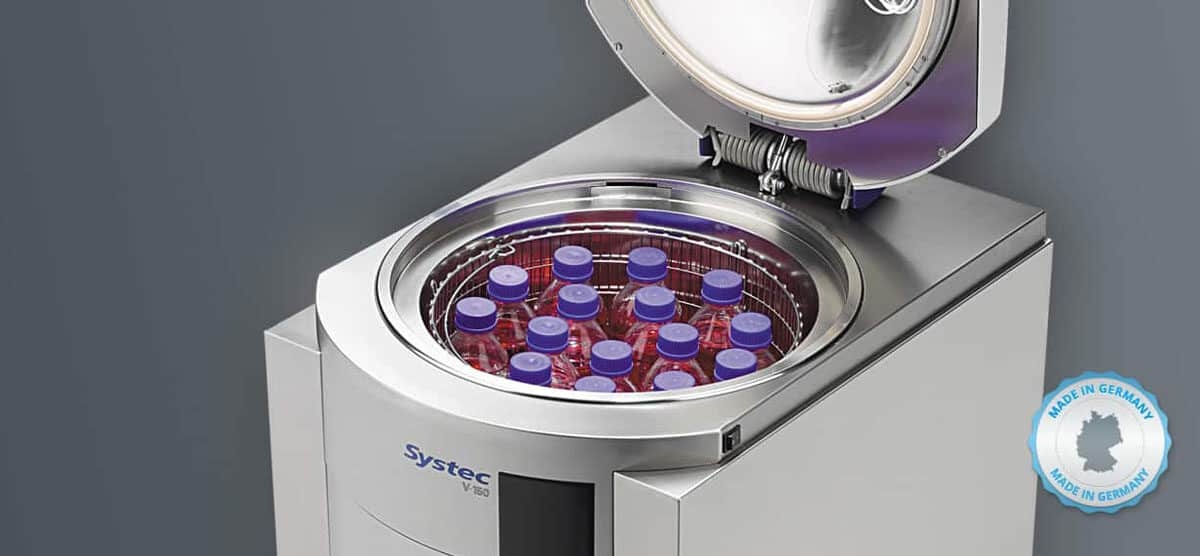
- Safety system: Consists of temperature sensors, pressure sensors, door sensors, water level sensors in the boiling chamber, etc. The safety level of the autoclave varies depending on the manufacturer and model. Some brands such as ALP – Japan, Sturdy – Taiwan, Hirayama – Japan, Tomy – Japan, and Systec – Germany are widely recognized by users today.
- Heating element: Made of a heating coil enclosed by thermal and electrical insulation layers. The outer layer is made of chrome-plated copper or stainless steel. This component comes into frequent contact with water and chemicals. Therefore, to prevent damage and reduced lifespan, this part should be cleaned regularly.
- Electrical system includes: Power, control, and display boards. It functions to interconnect components for smooth and proper operation according to standard operating procedures.
Classification of autoclave types
Autoclaves feature diverse designs. However, you can classify them based on the following 2 criteria:
1. Classification by design
- Benchtop autoclaves: These units offer small to medium capacities, mostly under 50 liters. Benchtop autoclaves feature a fairly simple, rectangular box design. Despite their compact size, they provide highly effective sterilization and fast sterilization cycles. This benchtop design is widely used in small and medium clinics.
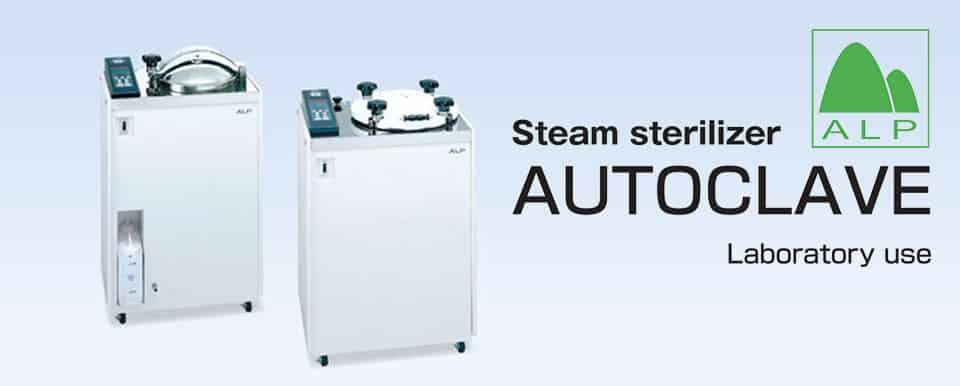
- Vertical autoclaves: Designed in a vertical cylindrical shape, surrounded by an external steel frame. Vertical autoclaves are used to sterilize samples such as instruments and culture media. They are widely used in polyclinics and microbiology laboratories.
- Horizontal autoclaves: Feature large capacities with horizontally designed chambers. The biggest advantage of horizontal autoclaves is the ability to sterilize extremely large quantities while maintaining uniform temperature along with high pressure and rapid heating.
2. Classification by function
- Steam autoclaves: Utilize saturated steam to sterilize medical instruments that do not require drying, as they are not designed with a drying function.
- Drying autoclaves: Feature automatic or manual drying functions.
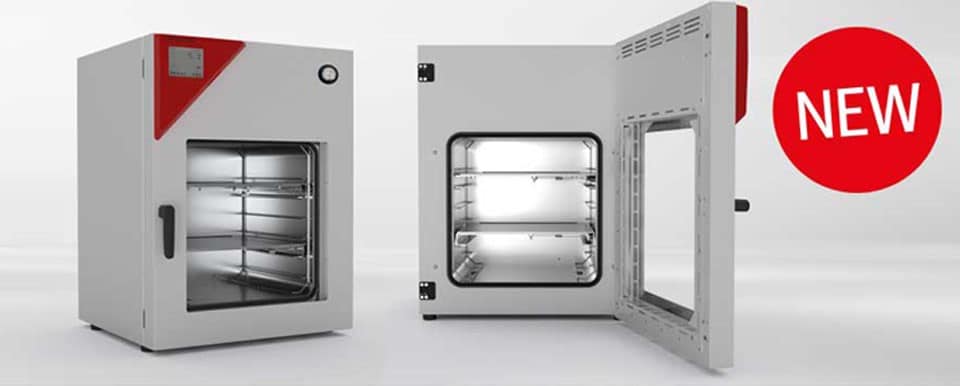
- Vacuum drying autoclaves: Integrated with a vacuum function to create vacuum cycles both before and after sterilization.
Choosing the right autoclave for your needs is essential. Using the right product for your intended purpose saves effort and money, and
ensures optimal work efficiency.
Most popular autoclaves today
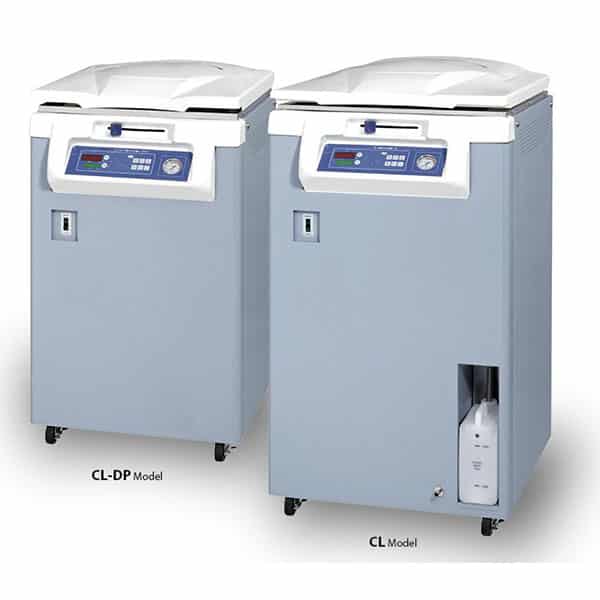
Autoclaves not only come in diverse designs but also feature many different brands and models. Below are the most popular ALP autoclave lines for your reference and selection:
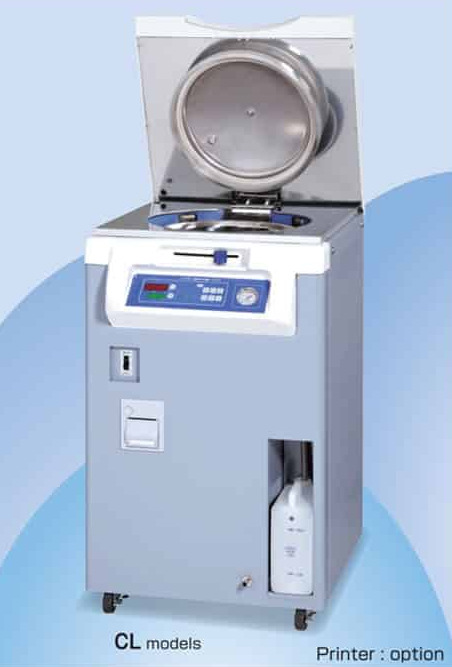
1.Series CL
- Specifications:
- – Includes multiple models with different volumes: CL-32S (34L), CL-32L (54L), CL-40S (60L), CL-40M (85L) and CL-40L (105L).
- – Temperature range (Max pressure): 100℃-140℃ (0.270MPa)
– Sterilization time: 48 hours 00 minutes
– Dissolution temperature / time: 40℃-99℃ / 48 hours 00 minutes
– Warming temperature / time: 40℃-60℃ / 48 hours 00 minutes
- Applications:
- The ALP CL Series autoclave is an equipment used to sterilize laboratory utensils used in microbiological and pharmaceutical research laboratories to destroy and prevent cross-contamination of bacteria via steam pressure and high temperature.
2. Series CL-DP
- Specifications:
– Includes various models with different capacities: CL-32SDP (34L), CL-32LDP (54L), CL-40SDP (60L), CL-40MDP (85L), CL-40LDP (105L)
– Temperature range (Max pressure):
+ 100℃–140℃ (0.270MPa) for capacities 34L, 54L.
+ 100℃–137℃ (0.250MPa) for capacities 60L, 85L & 105L.
– Sterilization time: 48 hr 00 min.
– Drying temperature / time: 60℃–150℃ / 99 hr 59 min
– Dissolution temperature / time: 40℃–99℃ / 48 hr 00 min
– Warming temperature / time: 40℃–60℃ / 48 hr 00 min
- Applications:
The ALP CL-DP Series autoclave is an equipment used to sterilize laboratory utensils used in microbiological and pharmaceutical research laboratories to destroy and prevent cross-contamination of bacteria via steam pressure and high temperature. With the CL-DP series, the unit features a drying function after steam autoclaving.
For more information or to place an order, please contact Hoa Viet immediately via hotline: 028 39 789 666 for consultation and support.
For further details, please contact:
Hoa Viet Co., Ltd.
- Address: Le Cao Lanh, Phu Thanh, Tan Phu Dist., HCMC
- Hotline: +(84) 28 39 789 666 | +(84) 28 39 789 777 | +(84) 28 39 789 888
- Website: hoaviet.vn
- Zalo OA: Hoa Viet Co., Ltd.
- Email: hoaviet@hoaviet.vn
- Fanpage: Hoa Viet Co., Ltd. – Hoa Viet Co., Ltd
- Opening hours: T2-T6: 8h-17h || Sat: 8h-12h