Binder vacuum drying chambers: 4 key factors to consider before purchasing
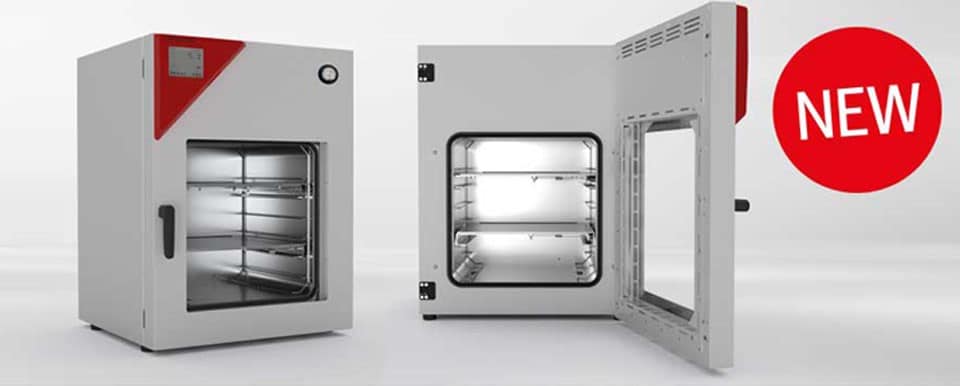
BINDER vacuum drying chambers are used in numerous industrial manufacturing and research fields. Vacuum drying is the process of drying in a vacuum environment to protect the sample. Its applications range from drying food and pharmaceutical products to material testing. This article provides buyers with an overview of all factors to consider before purchasing a vacuum drying chamber, starting with an explanation of the general operating principle, followed by key features to identify precisely what details to look for before making a selection.
When are vacuum drying ovens used?
In some cases, many research samples cannot be dried at high temperatures, such as:
- In microchip testing, the conductivity of electronic components can decrease at high temperatures, and there is always a risk of oxidation or corrosion occurring during the drying process.
- In food products such as fruits or in pharmaceuticals, drying at high temperatures can cause the loss of certain internal components and significantly alter their properties during conventional drying.
- Samples containing flammable solvents cannot be dried at high temperatures.
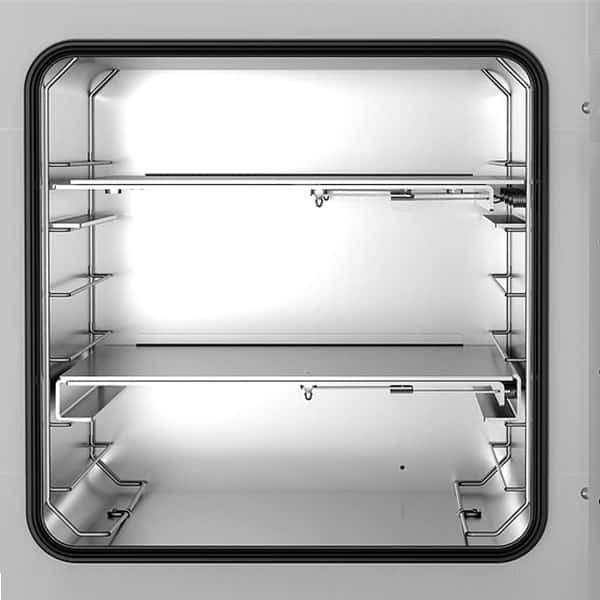
In all the above cases, a vacuum drying oven is the only choice for drying samples. The test sample is placed completely inside the vacuum oven chamber. The chamber pressure is then reduced until a vacuum environment is created. The boiling point of the material decreases, releasing water molecules that are drawn out of the chamber as water vapor. This process can be accelerated by applying heat. However, since heat cannot naturally transfer through air in a vacuum, it is transferred via the shelves.
Things to consider when purchasing a vacuum drying oven:
- Internal chamber volume
- Temperature range
- Equipment and operation
- Safety level
Point 1: Internal volume of the vacuum drying chamber
The smaller the chamber, the faster and more stable the vacuum environment created. That is why the internal volume of vacuum drying ovens is typically smaller than that of conventional drying ovens. The volume of vacuum drying ovens usually ranges from 20-150 liters. Large-volume exceptions do exist, commonly used in the food industry. Customers should consider the dimensions of their test samples or specimens under study to select an appropriate volume.
Point 2: Temperature range
Depending on the sample and sample characteristics, an appropriate vacuum drying chamber can be selected. Certain raw materials, synthetic materials, and solvents can become hazardous when dried at high temperatures. BINDER VD vacuum drying chambers have a temperature range of Ta+9°C to 220°C, and Ta+9°C to 110°C for the BINDER VDL vacuum drying chamber series.
Point 3: Equipment and operation
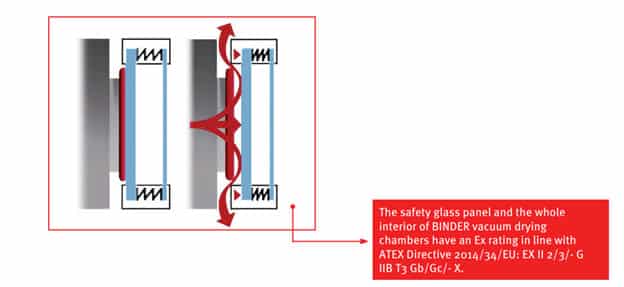
Since vacuum drying ovens are typically in continuous use, all components must be as durable, low-maintenance, and easy to clean as possible. All surfaces must be easy to clean, and ideally, the unit should feature an internal decontamination function. An inspection window is required for visual monitoring during the drying process; this should be made of safety glass and, if possible, spring-mounted.
Gas supply lines providing an inert nitrogen flow to the vacuum chamber help enhance the drying process.
The necessary accessories to directly transfer heat to the dried material effectively will be an important factor to consider when choosing a reputable supplier.
For BINDER vacuum drying ovens, customers also have the option of using a touchscreen to simultaneously display actual pressure and temperature values. This effectively allows users to monitor the chamber's ongoing process stages at any time. Innovative BINDER vacuum drying chambers also automatically control and activate the drying function once the unit reaches safe operating conditions. This function enables automatic detection of the drying cycle completion and vents the chamber to balance pressure upon finish.
Point 4: Safety level
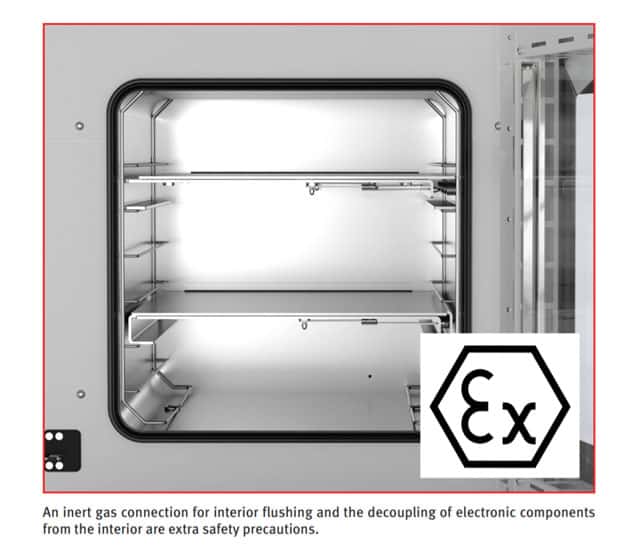
Using conventional drying equipment to dry flammable materials poses an extremely high explosion risk, endangering the user. Binder's VDL series vacuum drying ovens feature a special safety design for use with flammable solvents. Drying occurs quickly, explosion-proof, and without sample oxidation. The drying rate should not be regulated too quickly to ensure maximum sample protection. The improved design of the BINDER VDL vacuum drying oven complies with the ATEX 2014/34/EU explosion-proof standard: EX II 2/3/-GIIB T3 Gb/Gc/-X.